
Evidence base
TEAM-QI has an extensive evidence-base underpinning its development, the tools used within it and its use within different types of healthcare teams.
TEAM-QI is underpinned by evidence about what works in team improvement.
- TEAM-QI is built on evidence of drivers of effective teamwork in healthcare and developed from a substantial body of research on what enables and sustains high-functioning teams in clinical settings.
- Programme content is based upon ‘Characteristics of an Effective MDT’, identified through insights from 2000 MDT members.
- Builds on successful quality-improvement programmes, originally developed in oncology, providing a structured intervention for quality improvement, demonstrating the power of iterative development cycles, continuous testing, and refinement based on data from hundreds of MDTs.
TEAM-QI Utilizes Validated Assessment Tools to Drive Measurable Change
TEAM-QI provides validated tools to assess and enhance team performance, ensuring evidence-based interventions tailored to team needs.
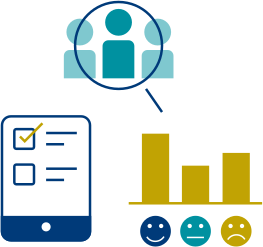
- TEAM-U (Team Evaluation and Assessment Measure): a validated self-assessment questionnaire enabling team members to share structured insights into how their team functions.
- MDT-MOT (Multidisciplinary Team-Meeting Observational Tool): a meeting observation tool for independently and systematically assessing team meeting processes, content, and behaviours.
Development of TEAM-QI used a complex, adaptive systems perspective method involving stakeholder input, content mapping to existing frameworks of teamwork in healthcare and pilot testing with real teams.
The programme is now being piloted and tested further with a wide range of organisations both in the UK and internationally.
Read about the programme development
A review of existing teamwork interventions has established need for a programme such as TEAM-QI for maternity services. TEAM-QI addresses the need for interventions that focus on the organisational and systems features, as well as the micro features of teamwork.